
01:09:16 pm 01/19/2026
Viewed: 5617
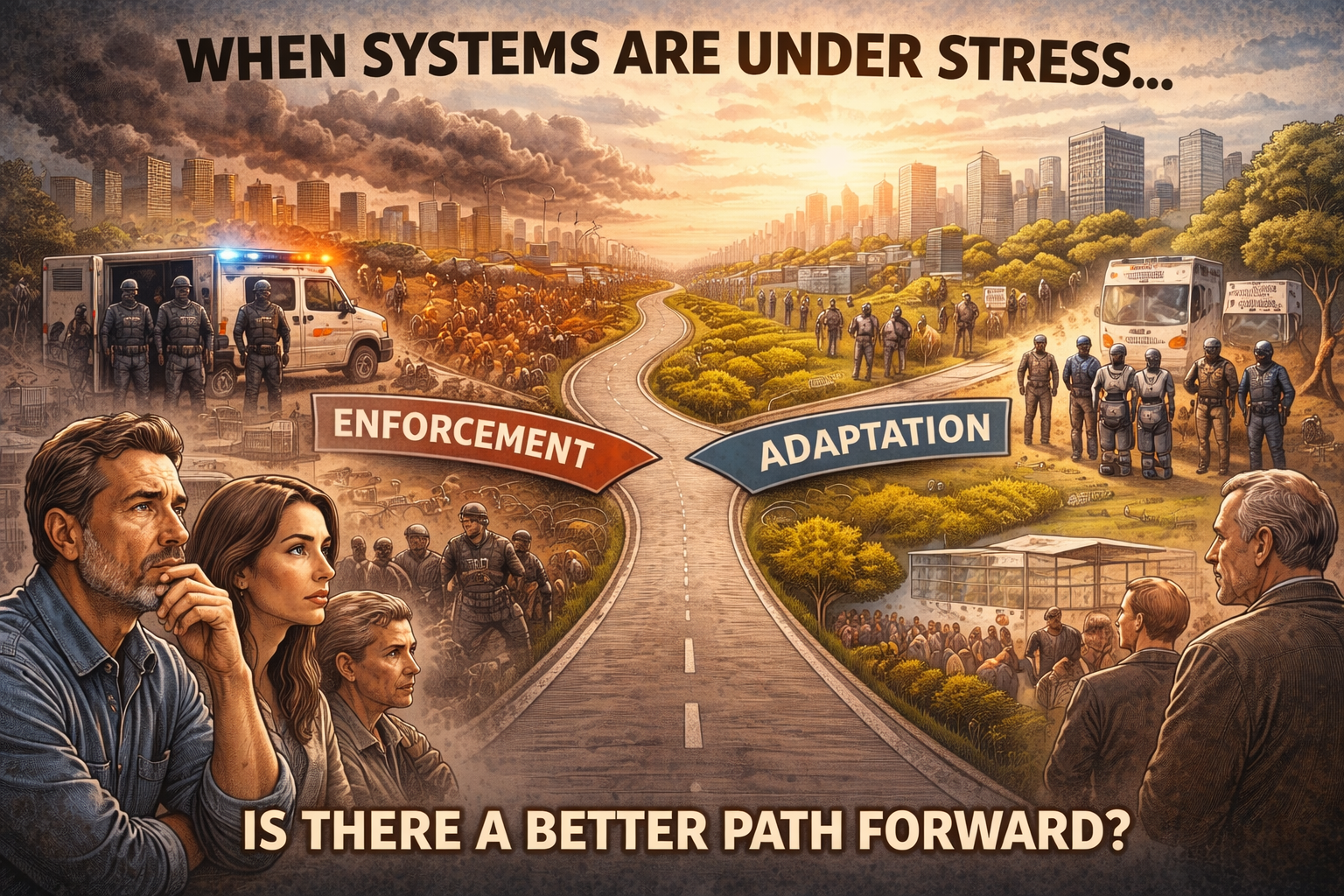
When Systems Are Under Stress, Bad Tools Get Used — And That’s the Real Problem
The solution our government is using is not the correct one. ICE is a tool that should never be used as a quick fix.
Most people can feel it:
something about the way the country is operating right now feels tense, rushed, and unstable.
Rights that once felt dependable feel uncertain.
Policies feel harsher.
Explanations don’t quite line up with outcomes.
It’s easy to argue about who is to blame.
It’s harder — and more useful — to ask why the system is behaving this way at all.
This Isn’t About One Policy or One Group
When large systems come under pressure — whether they’re technical systems, economic systems, or governments — they don’t usually fail all at once. Instead, they shift into emergency mode.
Emergency mode prioritizes:
speed over fairness
control over comfort
reaction over planning
That doesn’t mean leaders wake up wanting to be cruel.
It means they’re using tools designed for short-term crises to manage long-term change.
And that’s where things start to break down.
Automation Is the Pressure No One Wants to Name
Technology is quietly reshaping the economy faster than most institutions can adapt.
Automation and AI aren’t just changing jobs — they’re reducing the number of people needed to keep the system running. That puts pressure on:
employment
tax revenue
housing
social services
public trust
This kind of shift is rare and disruptive. Historically, when societies face it, governments struggle to respond smoothly.
Why Enforcement Becomes the Go-To Tool
In moments like this, governments tend to rely on tools that are:
fast
visible
legally flexible
immediately effective
Enforcement fits those criteria.
It’s not because enforcement is the best solution — it’s because it’s the only one that works quickly when deeper solutions take time.
The problem is that enforcement tools were never designed to manage social transitions. They were designed to handle specific violations, not system-wide change.
The Cost of Using the Wrong Tool
When enforcement becomes a stand-in for adaptation:
fear increases instead of cooperation
stress spreads beyond the intended targets
trust erodes
anger grows in all directions
Even people who aren’t directly affected feel unsettled — because unpredictability signals instability.
From a systems perspective, that’s not success.
It’s a warning sign.
Stability Doesn’t Come From Fear — It Comes From Predictability
People tolerate limits surprisingly well when those limits are:
clearly explained
consistently applied
visibly fair
tied to a future plan
What people struggle with is randomness, silence, and mixed signals.
In engineering terms, a system stabilizes when it:
communicates clearly
degrades gracefully
spreads load evenly
prepares users for change
Human systems are no different.
There Is a Better Way Forward
Preparing for large job shifts doesn’t require panic or punishment.
It requires:
honest communication about what’s changing
early preparation instead of last-minute enforcement
universal policies rather than targeted fear
economic adaptation before social control
These approaches don’t deny reality — they manage it more effectively.
This Moment Is About Design, Not Sides
It’s understandable that people are upset.
It’s also understandable that leaders feel cornered.
But when we step back, what we’re seeing isn’t chaos for chaos’s sake.
We’re seeing a system under strain, relying too heavily on emergency tools because long-term solutions weren’t built in advance.
That’s not a reason to panic.
It’s a reason to redesign.
A Simple Way to Think About It
When a system starts using emergency measures all the time, the problem isn’t the emergency — it’s that the system never planned for change.
The question isn’t whether control is necessary.
The question is whether control is being used where adaptation should be.
That’s a conversation worth having — calmly, clearly, and before the stress gets worse.
0
2
Comments
Log in to add a comment.